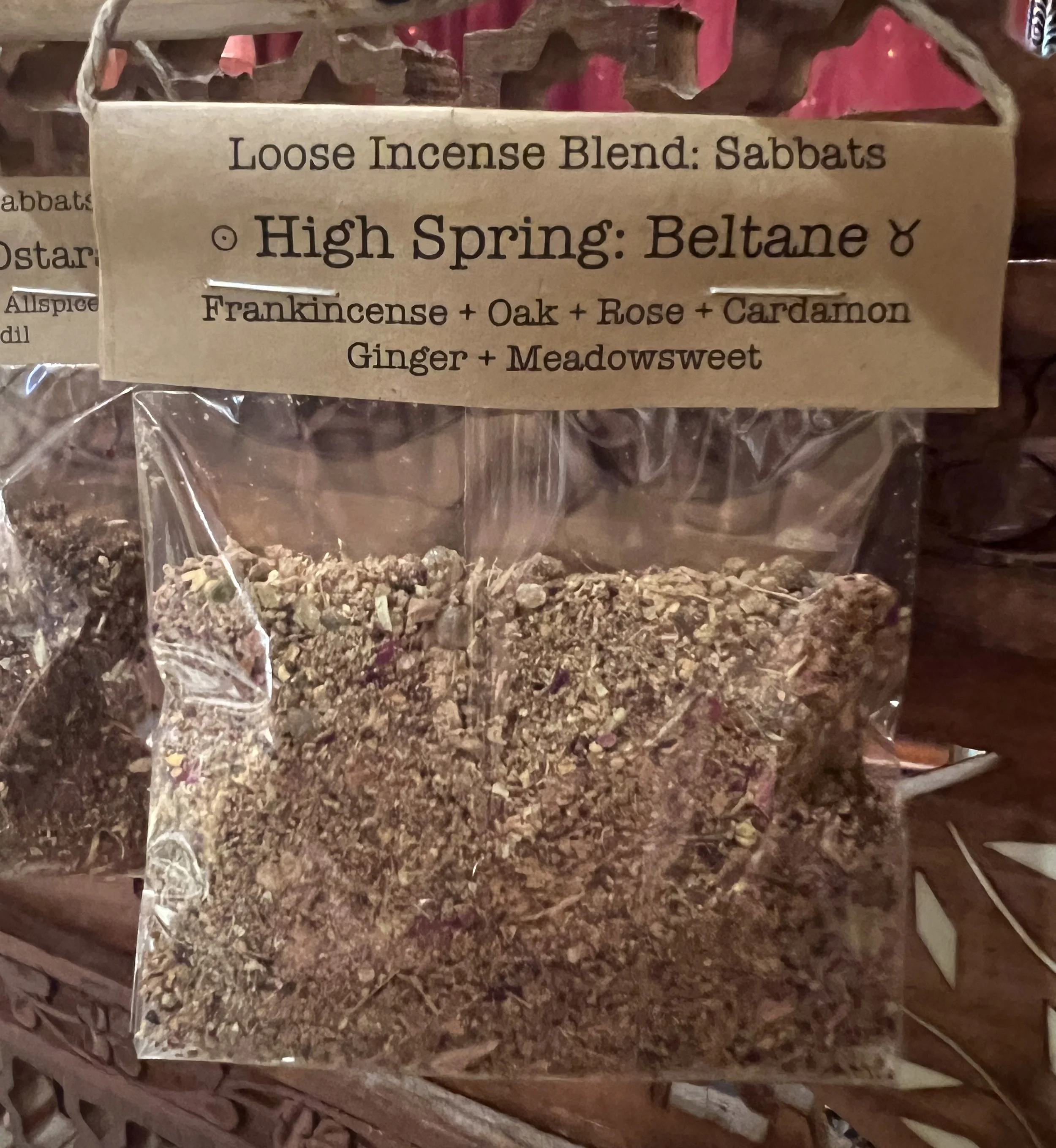
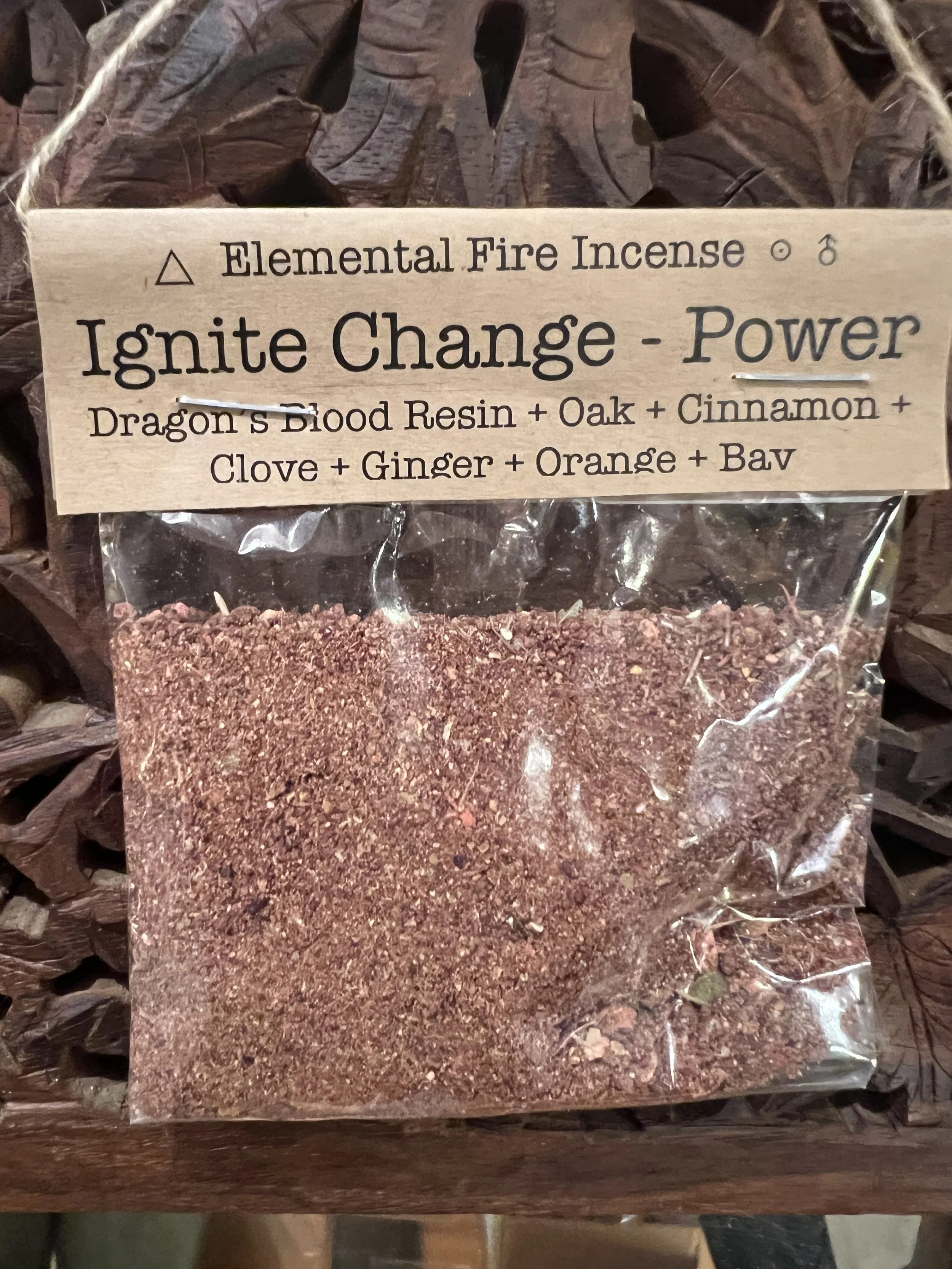
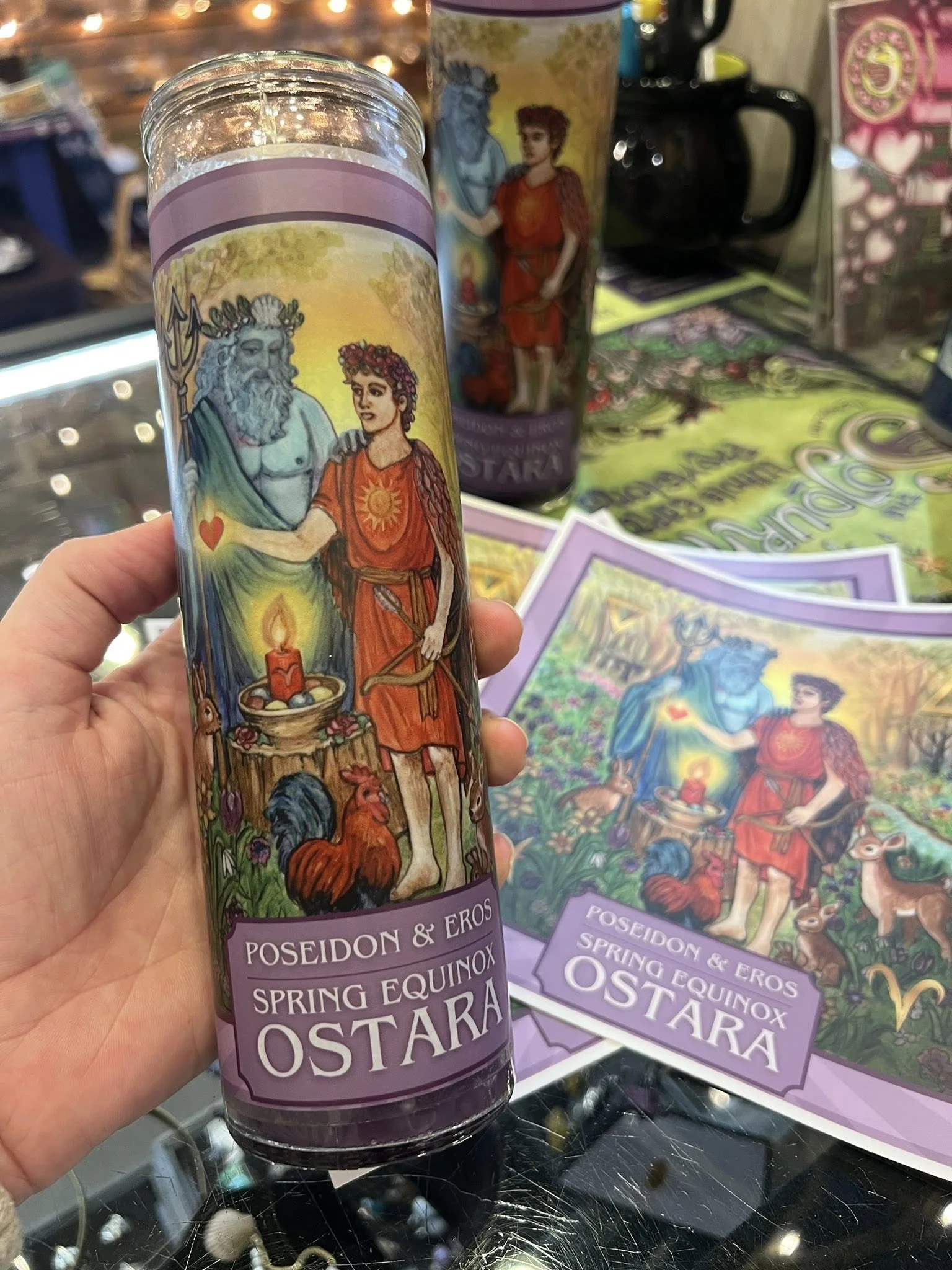
 Image 1 of 2
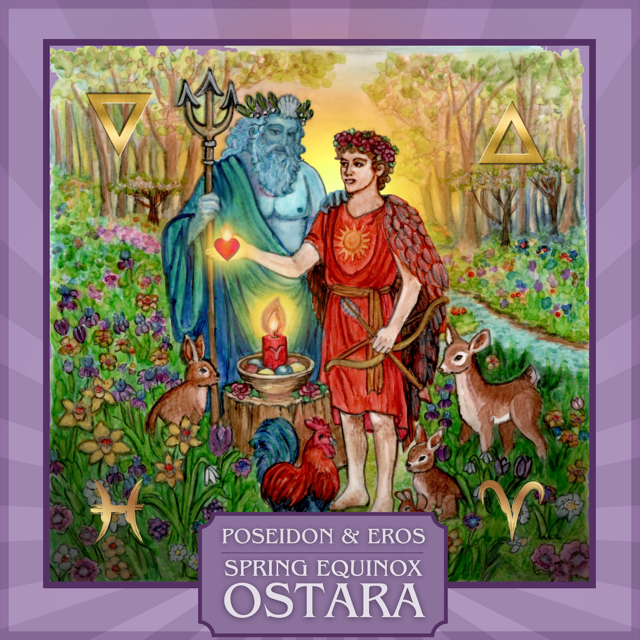 Image 2 of 2
From my Substack article: https://heronmichelle.substack.com
OSTARA: Old Gods for a New Dawn: Spring Equinox Through Water and Fire, March 20, 2026
Every year, when the sun’s arc softens the edge of winter and light finally stands in perfect balance with night, witches and pagans across the Northern Hemisphere gather for the Spring Equinox—Ostara. Friday, March 20, 2026, is when the sun enters Aries at 10:46 am, Eastern Time Zone. I recommend weekend celebrations anytime March 20-22, 2026.
Though many of our symbols look fresh and innocent—eggs, rabbits, blossoms, bees, dawn—this “lesser sabbat” has a lot of juicy meaning to offer. It is one of the more complex celebrations in the cycle of the year. Ostara is the hinge on which the entire turning of the Great Wheel swings from darkness into light.
Like Yule, what we inherit at Ostara is a weaving of many threads: Germanic folklore of Eostre, Mediterranean spring mysteries, agricultural customs, folk Catholic survivals, Victorian spring iconography, and modern Wiccan and neopagan reinterpretations. Spring Equinox meanings have been syncretic since antiquity. It’s strength is adaptability to blooming in new soil.
As I’ve written and taught about this sabbat over the years, I’ve found that Ostara brings the awakening of desire on all levels of being.
At Imbolc, we name the seeds we intend to plant that turning, and prepare the earth to receive them. Then, Ostara is celebrated as planting, the fertilization of those seeds, and the moment they awaken and remember their desire to grow. It is the quickening, the first gasp after the long, deeo dream of winter’s sleep. It is the surge of fire’s energy through the bloodstream, the earth’s inhale before everything erupts in green.
So, as I develop the Solar Witchcraft material for the third book of the Pentacle Path series, I’ve been revisiting the deeper mythic architecture beneath Spring Equinox—asking the same questions that guided my Yule and Imbolc explorations:
If the Wheel of the Year is a relatively modern ritual cycle, how might the old gods choose to speak through it in a new way?
How do we honor historical integrity while embracing mythopoetic truth?
How might seasonal archetypes be illuminated by specific deities from ancient lore?
AND, if we release slavish adherence to historical practices, and allow the living presence of the Old Gods to emerge anew, will that invigorate relevance for modern people?
The answer at Ostara, I believe, lies in understanding the polarity that defines every sabbat, and especially the equinoxes—not just the balance of light and darkness, and the deeper tensions between the two zodiac across the wheel, but also the two adjacent signs that meet at those thresholds.
For Ostara, that transition is from the Mutable Water of Pisces into the Cardinal Fire of Aries—from dissolution to ignition, from dreaming to action, from the oceanic unconscious to the spark of becoming. It also kicks off the new zodiacal wheel, from the elder wisdom of Neptune-led Pisces, to the infant’s cry of Mars-led Aries. This moment reminds me of the Thoth Tarot’s Art Card, the Alchemist shown blending water and fire, reconcioling the paradox’s of these opposites. See where I’m headed with this line of thought?
Before we arrive at the gods themselves, let’s step back into the land of witches—into folk wisdom, poetic imagery, and the magic that rises from the soil as the world thaws.
The Spring Equinox: A Time of Balance
In my past Ostara articles on Witch on Fire, I’ve often described this sabbat as the moment when the ground softens; the birds return; the buds swell; the winds shift to carry the pollen of fertilization. But beneath this gentle pastoral veneer is a tremendous surge of energy, and gorgeous poetry begging to be ritualized.
In spring, Nature is urgent, hungry, and charged for mating, nesting, rooting, sprouting, and reclaiming space. The equinox is the teetering razor-thin edge before the scales tip decisively toward light.
In magical terms:
Pisces = dissolution, vision, dream, the ocean womb
Aries = ignition, desire, identity, emergence
These two are sequenced energies: one transforms into the other. Pisces release flows into Aries’ becoming. This is the water-fire paradox of Ostara, and every spring ritual, somewhere in it’s DNA, remembers that alchemy.
In modern spring symbolism across cultures, eggs symbolize latent potential, and seeds are literally an intention for what future fruits you choose to cultivate. Fire rituals ignite those intentions. Offerings at rivers, wells, or rites collecting the dew of dawn symbolize the watering of those seeds of intention so that they germinate and grow.
After the long winter’s nap, Ostara is where witches get to movin’ again.
Poison and Antidote at the Equinoxes
In Solar Witchcraft, I work with what I call the logic of poison and antidote. Every seasonal threshold carries both a danger and its medicine. The same force that brings life can, when unbalanced, become the very thing that harms us. The work of the sabbat is not to choose one pole over the other, but to reconcile them.
At the equinoxes, this tension is especially sharp, because we are standing between two adjacent zodiac signs. What emerges is not a single lesson, but a sequence: one sign dissolves into the next, and the poison of the first becomes the raw material for the second.
Ostara: Pisces into Aries
At Spring Equinox, the Sun crosses from Pisces into Aries. This is the moment when that dissolution meets the catalyst of Aries fire and ignites those dreams into purpose. Allow me to lay out the logic:
The poison of Pisces is the formlessness of emotion: the tendency to dissolve into overwhelm, to dive so deeply into the puddle of your feelings that you drown…no clear direction remains. In its excess, Pisces becomes exhaustion, confusion, and a loss of meaningful purpose.
Its antidote is the higher current of Pisces: compassion, imagination, surrender to something larger than the ego. Pisces teaches us to release what has died and to feel our way toward what is possible.
Pisces mutable power can clear away the dead remains of last year’s garden, but isn’t great at planting the new seeds. That is where Aries comes in.
The poison of Aries is the impulsivity of desire without clear purpose: egoic eruption, domination, action without reflection. In its excess, Aries becomes reckless, burning energy without building anything that can last.
Its antidote is the true gift of Aries: identity, courage, and the fire that courageously defends who you are, and what you want. Aries gives form to what Pisces released. It turns that old dream into decisive action.
Now that I’ve laid out all that logical analysis: Here is what I think the lessons of Ostara are here to teach us:
Our dreams must become deeds. The danger would be getting stuck in either pole — either drowning in feelings or exploding into pointless action. The medicine is the alchemy between them: water’s feelings that remember fire’s purpose. But that’s just the half of it.
Mabon: Virgo into Libra
On the opposite side of the Wheel, at Autumn Equinox, the Sun crosses from Virgo into Libra. Here, the sequence runs in the opposite direction: from service into relationship, from refinement into balance.
The poison of Virgo is over-serving to the point of self-erasure: the belief that one’s worth lies only in usefulness, that care must come at the cost of selfhood. In its excess, Virgo becomes martyrdom, anxiety, and endless fixing without rest.
Its antidote is Virgo’s true gift: discernment, skill, and the capacity to separate what is healthy from what is harmful. Virgo teaches us how to tend the body, the home, and the work with intelligence and care.
Virgo’s service alone cannot sustain a loving relationship. That is where Libra’s grace and compromise helps us out.
The poison of Libra is the loss of one’s center within relationship: dissolving the self into compromise, mistaking harmony for appeasement. In its excess, Libra becomes indecision, people-pleasing, and avoidance of necessary conflict.
Its antidote is Libra’s true gift: balance, justice, and the capacity to hold both one’s self and others in the same moral field. Libra teaches us that care must be mutual, and that relationship requires equality to be last long-term.
Holding all those threads, here is how I weave together the key lesson of Mabon: Service must be cooperative - shared for the mutual benefit of all in involved, and that shared life must respect needs of the individuals within those relationships.
Once more, the danger would be getting trapped in the extremes of either pole — either hyper-independence, doing everything alone, or, dissolving into helplessness and dependency on others for your sense of identity, without any healthy boundaries. The medicine is the reconciliation between them: service within interdependent love, love that respects each other’s independence.
How the Equinoxes Heal One Another
Circling back around to the bigger picture, and deeper pattern of how
Ostara and Mabon cure each other’s poisons.
The poison of Ostara could be the lustfulness of desire that serves no purpose…reckless ignition that threatens to burn our lives to the ground.
Mabon’s antidote is discernment and a balance of a shared passion that builds up our lives.
The poison of Mabon could be exhaustion through over-work, over-giving or self-loss within our relationships. Whereas, Ostara’s antidote is the gift of renewed vitality, the second wind we need to keep up the good fight, and the courage to begin again after any losses. Spring teaches us how to rise and Autumn teaches us how to share. Each equinox corrects the other’s excess.
The axis of consciousness formed between Aries and Libra is about identity. I call it The Path of Becoming. Together, they teach a complete ethic of becoming: to feel deeply without drowning, to act boldly without destroying, to care about others without disappearing, and to love others without losing yourself.
In this way, the equinoxes are about more than the balance of light and dark days. They are ethical thresholds, places where the soul is asked to refine how it uses energy, desire, care, and power. At Ostara, our magick should ask what we are bringing to life… and then when Mabon rolls around six months later, our magick should ask how will we live with what we have made?
The Pisces Elder: An Ocean of Dreams
When considering which deity best expresses the Pisces side of Ostara, I looked to the ancient world for ideas. The Theoi database is an excellent resource for tracing the multifaceted nature of Greek and Roman deities, and what emerges from the lore is that Poseidon (Neptune in Rome) is far more than the sea-stormer of pop mythology.
Poseidon embodies: the primordial waters from which life arises, rivers, springs, wells, and horses as symbols of the life-force. He embodies the wild, instinctive forces of nature, fertility and generative power
He is the water before the seed swells and the intuition before the decision. Poseidon’s voice, as the wise Pisces Elder, can be heard in winter’s last great exhale. He rules over the dreaming world until it is time to wake.
The Aries Youth: The Spark of Desire
If Poseidon is the oceanic dream of winter, then who best represents the fiery burst of spring? The answer appeared as soon as I reviewed the Theoi entry for Eros (Cupid to the Romans). I’m not talking about the Victorian’s chubby, winged cherub, or the Hallmark angel. The ancient Eros—the one known in Hesiod’s Theogony is a primordial force, the spark that brings separate things together, the drive toward life, attraction, desire; the fire awakening seeds, animals, bodies, hearts; the pulse of spring, the dynamic, cardinal blaze behind Aries itself.
Later myths also call him the child of Aphrodite and Ares who was born from Love and War, as a being of passion, courage, and raw potency. My view of Eros is not “cute.” He embodies the raw life force present the moments when you choose to live fully. He can be heard throughout the world as the cry of new lambs, the mating calls of birds, and seen in the eruption of spring’s blossoms.
In Poseidon we dream, then, at awakening Eros brings the passion for life that gets us out of bed in the morning, and the verve to carpe diem - seize the day.
The Ostara Dyad: A Modern Mythopoetic Proposal
Just as I suggested in the Yule article that Odin/Baldur form a modern dyad for Yule—one that creatively reflects ancient lore—I propose a similar approach for Ostara and call upon these old gods for this new approach to the dawn: Poseidon as the Elder God of Pisces paired with Eros as the Youthful God of Aries.
I propose this alignment as a new approach to mythopoetic mapping—a way the old gods might speak through the modern Wheel of the Year. Just as the Norse god of light, Baldur, was not literally born at Yule, neither was Eros attending his manhood rites at Ostara. Neither did Poseidon preside over the Spring Equinox in Greek religion, as far as I can tell. But to my thinking, their energies align with the season and express the spring mysteries, and so I invite them to join the Sabbat dance this turning.
But this is just my wild idea, what do you think?